Connecting MES/MOM to everything else: integration patterns that last
Point-to-point, middleware, event-driven or UNS. How to connect MES/MOM with ERP, PLM, WMS, QMS and the rest, and how to choose a pattern that survives upgrades.
Ask anyone who has run an MES project where the time went, and integration will be near the top of the list. Not because it's hard to move data between two systems. Because it's hard to keep doing it reliably for ten years, through upgrades on both sides.
This article pulls together the patterns behind the rest of this series: PLM, CPQ, WMS, APS, QMS, EAM and LIMS.
Start with ISA-95, not with technology
ISA-95 gives you a common language for what flows between business systems (level 4) and manufacturing operations (level 3). I explain the model in What is ISA-95, and where does MES fit?
The useful part isn't the diagram. It's the discipline. For every integration, agree:
- What object is moving? An order, a material lot, a quality result, a downtime event.
- Which system owns it? One owner. Everyone else holds a copy.
- What triggers the move? An event, a schedule, a request.
- How fresh does it need to be? Seconds, minutes or overnight changes the design entirely.
Get those answers for every flow before anyone mentions an API.
ERP is usually the hub. Usually.
In most manufacturers, ERP sits between MES/MOM and the other business systems. Product data comes from PLM via ERP. Orders come from ERP. Inventory, cost and quality status go back to ERP. That's a sound design. ERP has to know about all of it anyway.
But "usually" matters. Throughout this series I've described cases where a direct link alongside ERP makes sense: engineering drawings from PLM, high-frequency replenishment with a WMS, rich non-conformance data into a QMS, in-process lab results from LIMS. The rule I'd suggest:
Business transactions go through ERP. Execution detail can go direct when speed or richness demands it.
A direct link is an addition to the ERP path, not a bypass of it.
The four patterns
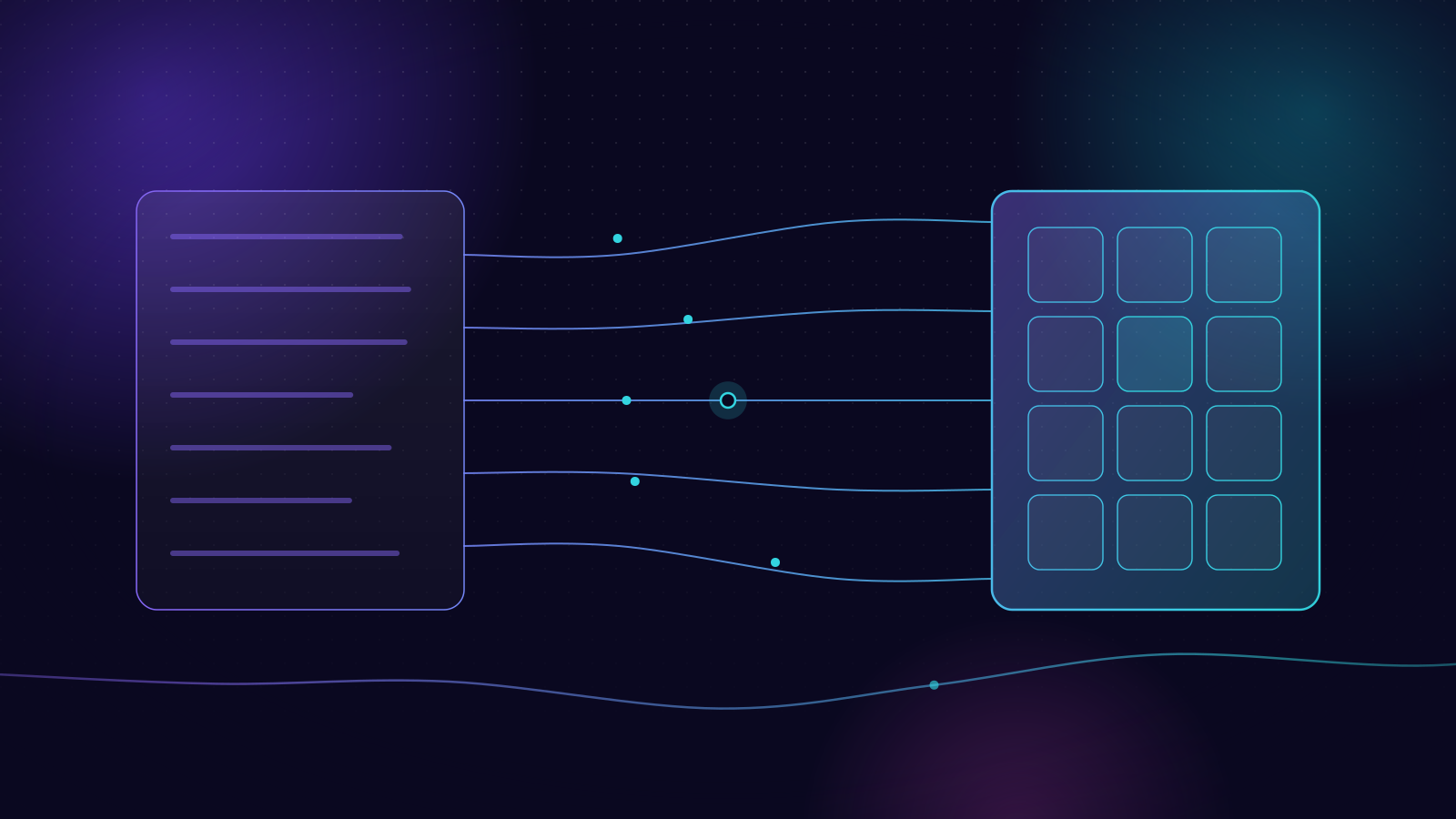
Point-to-point. System A calls system B directly. Quick to build, easy to understand. Fine for two or three integrations. With eight systems, you can end up with dozens of connections, each with its own error handling, and each one breaking when either side upgrades.
Middleware or integration platform. An integration layer (an ESB, or a cloud iPaaS) sits in the middle. Each system connects once. Mapping, routing, retries and monitoring live in one place. More upfront effort, much easier to run at scale.
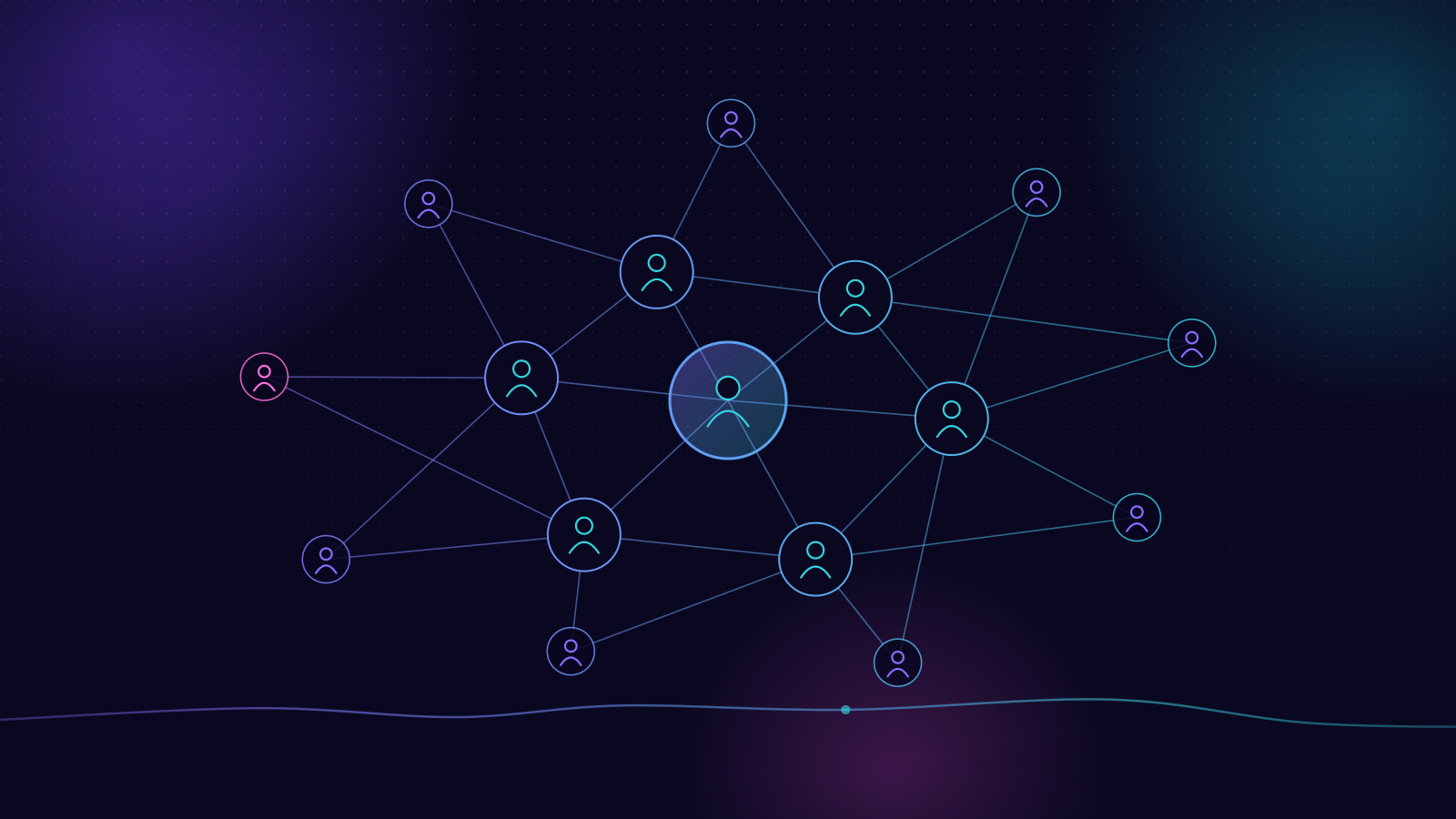
Event-driven. Systems publish events ("order released", "lot on hold", "machine stopped") and anyone interested subscribes. Producers don't need to know who's listening. Excellent for decoupling and near real-time flows.
Unified namespace (UNS). An event-driven pattern applied to the plant: a single, structured hierarchy (usually on MQTT) where every system publishes its current state and anyone can subscribe. I explain the basics in OPC UA, MQTT and UNS in plain English.
These aren't mutually exclusive. A common, sensible mix: a UNS for shopfloor and machine data, an integration platform for transactional flows between MES/MOM and ERP, and as few point-to-point links as you can manage.
Transactions vs telemetry
One distinction that saves a lot of pain:
| Transactions | Telemetry | |
|---|---|---|
| Examples | Order release, goods issue, production confirmation, quality status | Machine states, temperatures, counts, alarms |
| Must arrive | Exactly once, in order, acknowledged | Latest value matters most |
| Typical pattern | Integration platform, APIs, guaranteed messaging | UNS, MQTT, OPC UA |
| If lost | Stock or cost is wrong | A gap in a trend |
Be wary of anyone who wants to push ERP transactions through the same "fire and forget" path as sensor data. Losing a temperature reading is annoying. Losing a goods issue means your stock is wrong until the next count.
Design for the upgrade
The integration you build today will outlive at least two upgrades of every system it touches. A few habits that help:
- Use standard, supported APIs. Avoid writing directly to another system's database. It will work until the day it doesn't.
- Keep mapping logic out of both endpoints. Put it in the integration layer, where it can be changed without touching either system. It's configure, don't customise applied to integration.
- Monitor and alert. A failed message should page someone, not wait to be found at month end.
- Make it replayable. When something fails, you need to resend from the point of failure without creating duplicates.
How many of your current integrations would survive an ERP upgrade without anyone touching them?

Matt Barber
VP & General Manager for MES at Infor. Started as an MES developer, then ran projects, solution design and product. Writes about the smart factory, shopfloor AI and the MES/MOM foundations underneath them.