Straight answers to the questions I get asked most
74 questions about MES, MOM, ERP and the smart factory, each answered in a paragraph. Every answer links to the full article if you want to go deeper.
MES, MOM and ERP basics
What the systems are, and how they differ.
What does MES stand for?
MES stands for manufacturing execution system. It's the software that gets the right order onto the right line and records what actually happened, including output and downtime, ideally straight from the equipment. It sits between ERP, which plans the business, and the machines and control systems on the shopfloor.
 Read the full article · 6 minWhat is MES/MOM?
→
What is the difference between MES and MOM?
MES is the production pillar. MOM, manufacturing operations management, covers the four areas ISA-95 defines for manufacturing operations, which are production, quality, inventory and maintenance, on one set of data. MES is one part of MOM. When a vendor says their MES covers everything, ask which of the four areas it actually handles, and how deeply.
Read the full article · 6 minWhat is MES/MOM?
→
Why does MES/MOM matter for AI?
AI needs accurate, contextualised data collected over time. A machine signal that says stopped means little on its own. MES/MOM adds the order, the material, the shift and the reason, which turns raw signals into data a model can learn from. The broader the scope, the richer that context.
Read the full article · 6 minWhat is MES/MOM?
→
Is MES the same as MOM?
No, although the terms are used interchangeably, including by vendors and, in the past, by me. MES describes production execution. MOM describes the whole operation across production, quality, inventory and maintenance. MES is one part of MOM rather than another name for it, and the distinction matters most when you're deciding what to buy.
 Read the full article · 3 minMES vs MOM
→
Where did the term MOM come from?
MES is the original term, from when systems focused on releasing orders, running them and recording what happened. As the best systems grew into quality, traceability, maintenance, logistics, tooling and energy, "execution system" no longer described what they did. MOM emerged as the more accurate name, and it lines up with the four areas of manufacturing operations defined in ISA-95.
Read the full article · 3 minMES vs MOM
→
Should I buy a separate system for each pillar?
It looks sensible on paper, but in practice context gets lost at every integration boundary and operators end up juggling applications. You also pay to retest each integration whenever either side upgrades. A dedicated system is sometimes the right call, for a complex warehouse or a heavy asset business, but make that a deliberate decision about depth rather than the default.
Read the full article · 3 minMES vs MOM
→
What does ERP do in a manufacturing company?
ERP runs the business side on one shared set of data. It records customer orders, plans what to make and buy through MRP, raises purchase orders, values inventory, costs production, invoices customers and posts every transaction to the ledger. In manufacturing it's where production is planned and accounted for: what should be made, from what, at what cost and by when.
 Read the full article · 5 minWhat is ERP?
→
What doesn't ERP do?
ERP isn't designed to run every operation inside the factory at the level of detail those operations need. It knows 500 units should be made this week. It doesn't need to know which batch of resin went into machine 7 or why the line stopped for 11 minutes. That second-by-second detail, captured at the point of work, is what MES/MOM and other specialist applications add.
Read the full article · 5 minWhat is ERP?
→
Do manufacturing-focused ERPs still need MES/MOM?
Some ERPs were designed with manufacturing in mind and cover more of the production side, such as detailed routings and shopfloor reporting. That makes the gap to MES/MOM smaller, which is helpful. MES/MOM still adds a different layer of data: finer detail, captured in real time, with every event tied to its order, batch, machine and operator.
Read the full article · 5 minWhat is ERP?
→
What is the difference between MES and ERP?
ERP runs the business side of a manufacturer: finance, sales orders, purchasing, planning and costing, working in months, weeks and days. MES runs production on the shopfloor in shifts, minutes and seconds, recording what happened by order, lot, machine and operator. ERP creates and costs the production order; MES/MOM executes it and sends the actuals back.
 Read the full article · 5 minMES vs ERP
→
Can ERP replace an MES?
For a small, simple operation, ERP's shopfloor reporting may be enough, and some ERPs designed for manufacturing cover more than others. It stops being enough when you need real-time machine data, lot-level traceability with quality results attached, in-process checks or guided work instructions. ERP should never be connected straight to the machines.
Read the full article · 5 minMES vs ERP
→
Do I need MES if I already have ERP?
Most manufacturers beyond the simplest operations do. ERP knows what should be made and what it cost. MES/MOM knows what's happening right now and whether it's right. ERP data also improves when MES/MOM is in place, because it receives actual consumption and output instead of backflushed estimates.
Read the full article · 5 minMES vs ERP
→
Does MES replace ERP?
No. ERP keeps running the business, including finance, purchasing, planning and inventory valuation. MES/MOM runs the shopfloor and keeps ERP up to date with what actually happened. Each does the job it was designed for.
 Read the full article · 6 minHow MES simplifies ERP
→
How does MES improve ERP data?
MES/MOM records consumption and output as they happen and posts the actuals to ERP, instead of ERP backflushing standard quantities. That makes inventory and product costs more accurate, and means production is confirmed in near real time rather than at the end of a shift.
Read the full article · 6 minHow MES simplifies ERP
→
Does ERP lose visibility when MES is introduced?
No. ERP keeps at least the information it had before, because MES/MOM keeps it updated, often with aggregated data. The detailed, high-volume shopfloor data stays in MES/MOM, which also reduces the transaction load on ERP.
Read the full article · 6 minHow MES simplifies ERP
→
What is the difference between MES, MOM and ERP?
ERP runs the business side: finance, orders, purchasing, planning and costing, working in months, weeks and days. MES executes production on the shopfloor in shifts, minutes and seconds. MOM covers the whole operation, adding quality, inventory and maintenance to production, and a MOM platform does that on the same data. ERP plans and accounts for production, while MES/MOM runs it and reports actuals back.
 Read the full article · 7 minThe manufacturing systems stack
→
Which system should own inventory?
ERP owns inventory as a financial asset. A WMS, or ERP if you don't have one, owns inventory inside the warehouse. MES/MOM owns line-side stock, work in progress and what each order consumed. The handover at the line is where most problems start, so agree who requests, delivers and records consumption.
Read the full article · 7 minThe manufacturing systems stack
→
Do I need a WMS, QMS or APS as well as MES?
It depends. A WMS adds the most value with complex warehousing, particularly distribution centres, a QMS only if your MES doesn't cover the quality system, and APS with genuinely hard sequencing. Many ERP suites include these as modules, so needing the capability doesn't always mean another vendor.
Read the full article · 7 minThe manufacturing systems stack
→
Smart factory strategy
Where to start, and the order that works.
What is a smart factory?
My definition is a manufacturing environment where people, processes and technology work together, supported by data, to maximise efficiency, flexibility and quality. The right information reaches the right person at the right time, and decisions are based on facts rather than gut feel. It doesn't need a version number like Industry 4.0 to describe its value.
 Read the full article · 5 minWhat is a smart factory?
→
Is a smart factory the same as Industry 4.0?
They overlap, but I'd rather describe what something does than give it a version number. Industry 4.0 is a label for a wave of technology. A smart factory is defined by outcomes: defined processes, planning connected to execution, real-time data at the point of work, one source of truth and people backed to make the call. You can have the technology without those.
Read the full article · 5 minWhat is a smart factory?
→
Where does MES fit in a smart factory?
MES/MOM is the operational backbone. It connects the business systems to the machines, runs the defined processes on the shopfloor and creates the contextualised data that analytics and AI depend on. A smart factory is broader than MES/MOM, but without it most of the other technology has no reliable operational data to work with.
Read the full article · 5 minWhat is a smart factory?
→
What is time to truth in manufacturing?
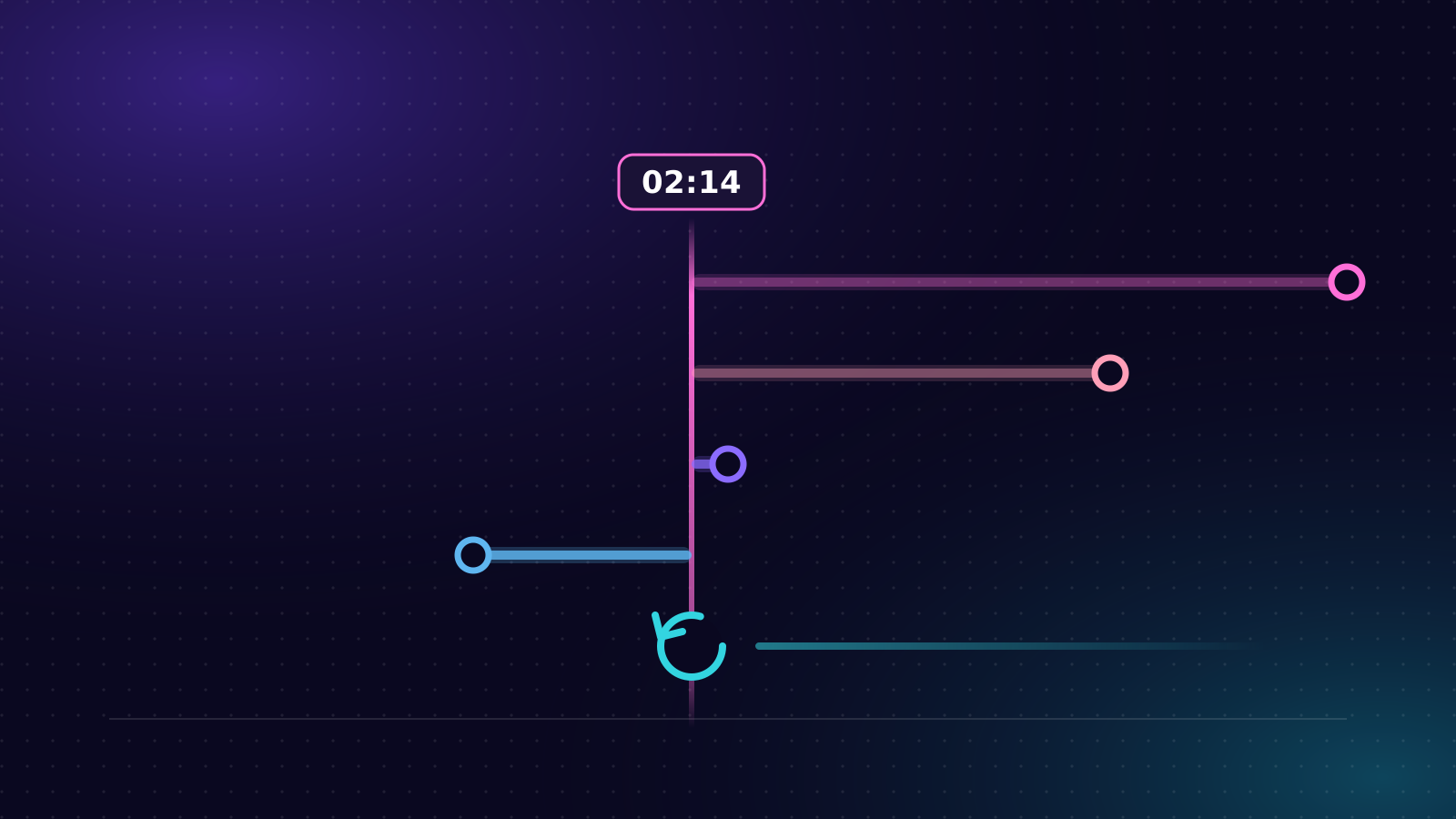
Time to truth is how long it takes your factory to know what really happened, such as a line stopping, with enough context to act on it. A plant on paper and Excel finds out eventually, whenever someone types it up. With automatic data capture through MES/MOM it knows within minutes, with the order and reason attached. A plant with harmonious, connected systems sees the problem coming before it happens.
 Read the full article · 7 minTime to truth
→
What are the seven stages of time to truth?
Eventually, with paper and Excel. End of the hour or shift, with production booked into ERP on the shopfloor. After the fact, with tablets and point solutions that are still keyed in by hand. Right now, with automatic data capture through MES/MOM. Before it happens, with harmonious systems working as one architecture. Before anyone asks, with AI agents preparing decisions for a person to approve. And without asking, with agents making routine decisions on their own inside agreed limits.
Read the full article · 7 minTime to truth
→
Can you get value from AI at every stage?
Yes, and the value grows sharply as the data improves. With paper and Excel it's low: an AI assistant can tidy and chart a spreadsheet, but it can't analyse what was never captured. AI on ERP data can forecast and spot trends, though it rarely explains why. AI that learns from your own operations, such as anomaly detection, root cause analysis, predictive quality and predictive maintenance, gets far more capable once data is captured automatically with its context, and that's where most of the value is. So start AI where you are, and build the data alongside it.
Read the full article · 7 minTime to truth
→
Where should a smart factory programme start?
With understanding, not buying. Walk the shopfloor on every shift, assess your maturity honestly and put numbers on the biggest losses. Then pick a first site, map its processes and check its master data before you write requirements. Talking to vendors comes after that, once you know what you actually need.
 Read the full article · 6 minSmart factory: where to start
→
How do you choose the first site for a smart factory programme?
Commit to a whole site rather than a single line. Look for a site where losses are measurable and worth fixing, with reasonably stable processes and keen site leadership. It helps if the equipment can be connected and the site is representative of others, so what you learn becomes the template. Avoid sites whose problems are mostly mechanical.
Read the full article · 6 minSmart factory: where to start
→
What should you avoid in the first 90 days?
Buying software before you know your requirements, treating AI and the data foundation as separate projects, or piloting a point solution you couldn't scale. Above all, don't leave the shopfloor out. People support what they helped create, and the operators know the workarounds that never made it into the procedures.
Read the full article · 6 minSmart factory: where to start
→
What is the first step in modernising a factory?
An honest assessment of where you are today. Most factories sit between paper-driven and partly integrated, and often earlier than their board presentations suggest. Then map what really happens on the shopfloor before you look at software. Digitise a broken process and you get a faster broken process, so the order of the early steps matters as much as the technology you pick.
 Read the full article · 8 minHow to modernise a factory
→
When should a factory invest in AI?
From the start, alongside the data foundation. Generative AI can help in the first weeks, working on procedures and shift summaries. Predictive and optimising AI learns from your shopfloor data, so start it on the first site you connect and let its payback grow as the foundation does: defined processes, MES/MOM running them, connected machines and contextualised data you trust.
Read the full article · 8 minHow to modernise a factory
→
Should you modernise one line or the whole site at once?
Commit to a whole site rather than a single line, and choose a platform and design that can grow to the whole operation. Within the site you can phase what you switch on first. Starting small with a tool that can't scale just swaps paper silos for digital ones. Once the first site works, turn it into a template and roll it out.
Read the full article · 8 minHow to modernise a factory
→
Choosing and delivering
Selection, business cases, deployment and timelines.
What should I ask an MES vendor?
Cover four areas. The technical foundation, including how master data and integration with ERP work. The user experience on tablets and shopfloor terminals, and how much training people need. The functional scope beyond production. Then future-proofing, including AI, IIoT and growth across sites. Ask for a demo built for your type of manufacturing, and put the system in front of one of your operators.
 Read the full article · 3 minHow to choose an MES
→
What are the most common mistakes in MES selection?
Focusing on price, or on a narrow set of today's problems, and writing an RFP that reads like a wish list. If you're asking for everything, you don't know what you want. Base requirements on your process maps, separate what you need now from what you might need later, and judge future needs at the level of platform capability rather than detailed features.
Read the full article · 3 minHow to choose an MES
→
How long should an MES last?
Choose it as a platform you'll grow with for many years. Get the decision wrong and you can find yourself evaluating again within three to five years, with the added pain of migrating away from a system that didn't fit. That's why breadth across the operation and the vendor's ability to keep investing matter as much as today's feature list.
Read the full article · 3 minHow to choose an MES
→
How do you build a business case for MES?
Speak business, not features. Put a value on today's pain in quality, downtime, labour, delivery and inventory, then connect each number to what the system will change. Show realistic costs and timeline, including your own people's time, not just licences and services. Then spend most of your effort on how the risk will be managed, because fear of failure is usually what's really blocking approval.
 Read the full article · 3 minThe MES business case
→
Why do MES business cases get rejected?
In my experience it's rarely the idea that's rejected. It's the way it's presented. Leadership hears technical features instead of business impact, or a past project went badly and nobody wants a repeat. Underneath most objections is fear of overrun and failure, so the case has to address that directly, with milestones, measures and clear decision points.
Read the full article · 3 minThe MES business case
→
What is the cost of doing nothing?
It's the risk you carry by staying as you are. Quality escapes, failed audits, experienced operators retiring with the knowledge in their heads, and competitors who are already moving. Framing the investment as risk mitigation often changes the conversation with leadership completely.
Read the full article · 3 minThe MES business case
→
Should we build our own MES?
It can work for a narrow scope and a strong internal team, and it can be quick to start. It is much harder to do well, particularly for user experience, performance, scalability and security. You own every upgrade and new capability for its whole life, and knowledge tends to sit with a few people. Eventually it needs replacing. For a full MES/MOM across production, quality, inventory and maintenance, most manufacturers get more value over time from configuring a platform and building only at the edges.
 Read the full article · 13 minCode, build, stitch or configure
→
Is stitching point solutions together a good approach?
It can work, and each department gets to choose its own tool. The cost is that every boundary is an interface to design, own and retest, some context is lost between systems, and someone has to govern the architecture. Connecting them through a unified namespace is risky, because the sender gets no confirmation that data arrived.
Read the full article · 13 minCode, build, stitch or configure
→
What does a homegrown MES really cost?
More than it appears. There's no licence fee, but the developers' time is real money, and it grows with every new feature, upgrade and departure. Add the cost of keeping it secure and compatible, and the risk when the person who built it leaves. Compare costs over ten years, not just the first project.
Read the full article · 13 minCode, build, stitch or configure
→
Is low-code an alternative to MES?
Low-code platforms are one way of building your own shopfloor applications, and they're usually much faster than coding from scratch. The best MES/MOM platforms include low-code tools too, so you can configure a platform and build on it with the same kind of tools, with much more already built for you on one connected data model.
Read the full article · 13 minCode, build, stitch or configure
→
Can MES run in the cloud?
Yes, and many vendors now deliver MES/MOM as SaaS. Machine connectivity typically runs on an edge component at each site, close to the equipment, while the wider application, reporting and analytics run in the cloud. Most multi-site MES already depends on the network, and internet connectivity is now close to as reliable as power for most sites.
 Read the full article · 4 minCloud vs on-premises MES
→
Is cloud MES secure?
Major cloud platforms invest in security at a scale few manufacturers can match, with continuous monitoring, rapid patching and certifications such as ISO 27001 and SOC 2. Ask any vendor which certifications they hold, how often they patch and which regions your data can be held in.
Read the full article · 4 minCloud vs on-premises MES
→
When does on-premises MES still make sense?
Mainly where a site has no reliable connectivity, or in air-gapped environments such as aerospace and defence. Some data residency rules also require data to stay in your own data centre. Some regulated sites also value full control over when changes happen.
Read the full article · 4 minCloud vs on-premises MES
→
How long does an MES implementation take?
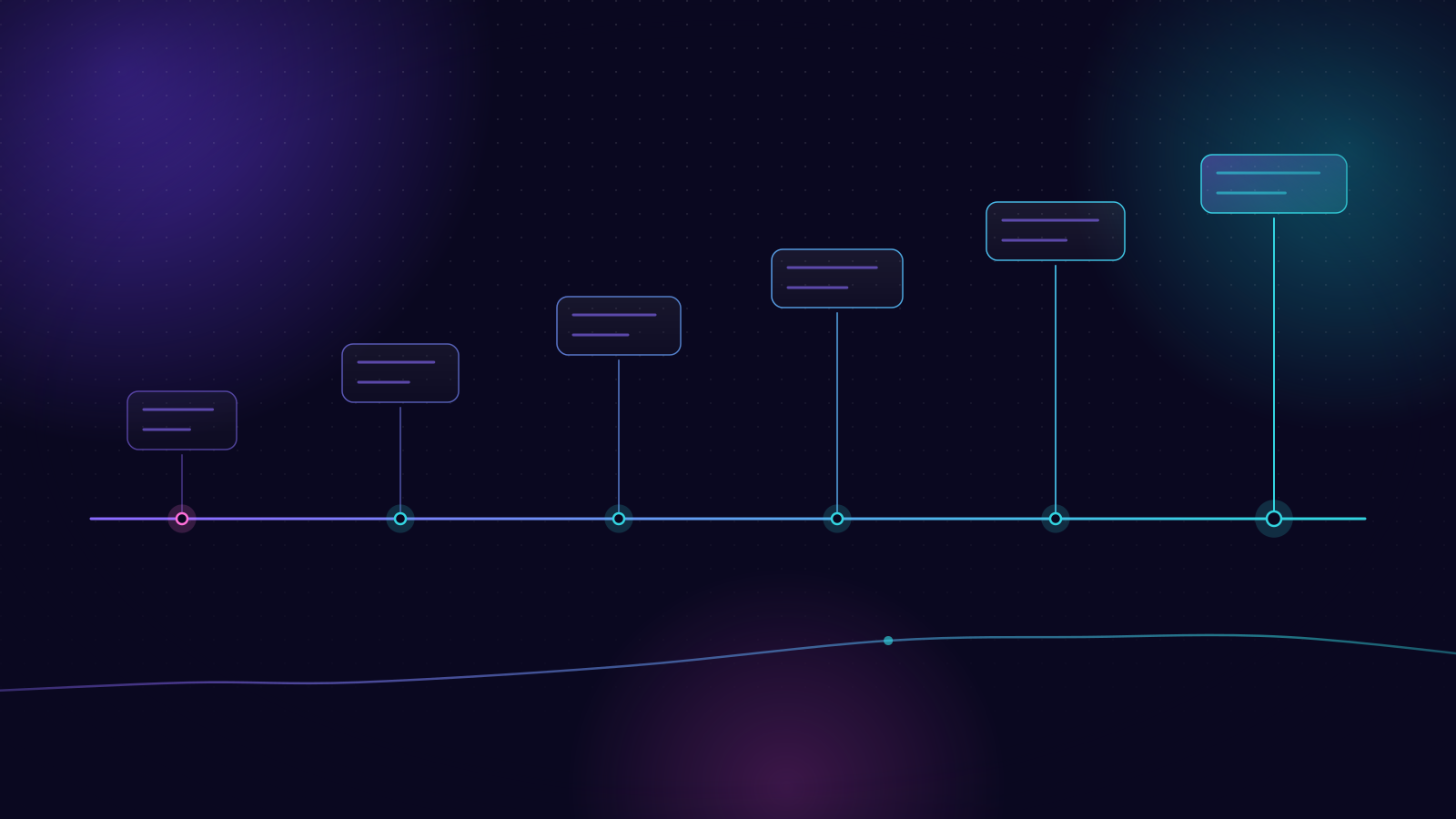
For a first site, my answer is between six and twelve months from kick-off to go-live. When I polled people on LinkedIn, twelve to eighteen months was the most common experience. A focused deployment at one site can be done in around six months, while a broad programme with complex integration takes longer. Later sites are much faster with a template, and several can be rolled out in parallel.
 Read the full article · 4 minMES implementation timeline
→
What makes MES projects run late?
The usual causes are scope creep, master data that turns out not to be detailed enough, under-resourcing because the people you need are already the busiest in the business, customising to match old quirks instead of simplifying, and legacy equipment that's harder to connect than expected. None of them are about the software install itself.
Read the full article · 4 minMES implementation timeline
→
Can an MES go live faster than six months?
Yes. I've been involved in projects that went live in about four months. The customer knew what they were buying, the team was superb and fully available, the product was highly configurable so almost everything was out of the box, and the first scope was small to medium. Preparation, people and scope made the difference.
Read the full article · 4 minMES implementation timeline
→
Running the shopfloor
Operators, traceability and maintenance.
What are shopfloor applications?
Software used at the point of work, by the people doing the work, in real time. That includes production execution, quality checks and SPC, inventory and traceability, maintenance, tooling, energy, digital work instructions, checklists, shift handover and skills. Together they make up the MES/MOM layer, sitting between ERP and the control systems.
 Read the full article · 7 minShopfloor applications explained
→
Should shopfloor applications be separate products or one platform?
You can buy most of them separately, but the problems overlap. Quality needs to know what's running, maintenance needs production's downtime, and operators need one screen rather than several logins. Every boundary is an integration to build and retest, and context gets lost at each one. I'd solve the most painful problem first, on a platform that can grow.
Read the full article · 7 minShopfloor applications explained
→
What is a connected worker platform?
Connected worker is about guiding frontline workers, supporting them in their daily activities and giving them the information and insights they need about the work to be done and the assets they look after. It's the digital layer between frontline people and everything they need to do their job. In practice that's digital checklists and tasks, structured shift handover, skills and certification tracking, always-current documents and work instructions, and health and safety sign-offs.
 Read the full article · 5 minConnected worker vs MES
→
Should connected worker be separate from MES?
Both approaches are used. A standalone app is quick to start, but doesn't know which order is running unless it's integrated. Built into MES/MOM, checklists and skills can react to what's actually happening and block actions. My preference is built in, so operators work in one application.
Read the full article · 5 minConnected worker vs MES
→
Why is connected worker growing so fast?
The workforce problem. Experienced people are retiring with knowledge that lives in their heads, and the people replacing them tend to stay for shorter periods. Shopfloor software now has to guide a new starter to get it right on their second day, not their second year.
Read the full article · 5 minConnected worker vs MES
→
What is the difference between lot and serial traceability?
Lot traceability gives a quantity of material one identifier, so you know which lots went into which lots. Serial traceability gives every individual item its own identifier, so you know exactly which components went into exactly which unit. Serial is more precise in a recall but needs every item marked and scanned.
 Read the full article · 4 minLot vs batch vs serial
→
What is the difference between a lot and a batch?
Often nothing: many companies use the words interchangeably. Where there's a difference, a batch is usually the quantity made in one production run, and a lot is a quantity tracked under one identifier. In US pharmaceutical regulations, a lot can be a whole batch or a defined portion of one.
Read the full article · 4 minLot vs batch vs serial
→
Do I need serial traceability?
It depends on the product. Regulated devices, aerospace parts and products serviced in the field often need serial-level records. Many other manufacturers use lot-level traceability with tight lot sizes, recorded as material is actually consumed rather than backflushed afterwards.
Read the full article · 4 minLot vs batch vs serial
→
What is the difference between preventive and predictive maintenance?
Preventive maintenance happens on a schedule, by calendar time or by usage such as running hours or cycles. Predictive maintenance uses condition data and failure history to forecast when a failure is likely, so work is done at the last sensible moment. Preventive is simpler to run; predictive needs sensors, data and history, and pays back most on critical assets.
 Read the full article · 3 minMaintenance strategies
→
Where should a factory start with predictive maintenance?
With accurate downtime data. Most factories still record stops at the end of the shift from memory, and miss short stops altogether. Capture stops automatically from the equipment with reasons added while they're fresh, then add condition sensors to bottleneck assets. Models need failure history and maintenance actions too, so the data foundation comes first.
Read the full article · 3 minMaintenance strategies
→
Measuring performance
OEE and the measures around it.
How do you calculate OEE?
Multiply availability by performance by quality. Availability is run time divided by planned time. Performance is the quantity produced divided by what the line could have made at its target speed. Quality is good quantity divided by total quantity. Together they simplify to good quantity divided by what the planned time allows at the target cycle time.
 Read the full article · 7 minWhat is OEE?
→
What is a good OEE score?
An OEE of 85% is often quoted as world class, a figure that comes from the total productive maintenance tradition. Many manufacturers run well below that, and a realistic target depends on your industry and starting point. An honest figure from automatic data capture is more useful than a higher manual one.
Read the full article · 7 minWhat is OEE?
→
Why does OEE drop when data capture is automated?
Manual recording misses short stops of a few seconds and rounds the length of longer ones, so manual OEE is usually higher than reality. Automatic capture from the equipment counts every stop. Explain the change before it happens, so the lower figure is treated as a more accurate baseline rather than a failure.
Read the full article · 7 minWhat is OEE?
→
What is the difference between OEE and TEEP?
OEE measures how well equipment runs during the time it was planned to run. TEEP measures how productive it is against all calendar time, 24 hours a day, 7 days a week. A line running two shifts on weekdays can have a good OEE and a low TEEP, which usually means there's capacity available in the hours it doesn't run.
 Read the full article · 3 minOEE vs OOE vs TEEP
→
When should you use TEEP?
When someone proposes a new line or another big capital investment. A low TEEP alongside a reasonable OEE often means the capacity already exists in unused hours. Before buying a new machine, it's worth asking whether an extra shift would do the same job.
Read the full article · 3 minOEE vs OOE vs TEEP
→
Architecture and integration
ISA-95, connectivity and the systems around MES/MOM.
What are the levels of ISA-95?
Level 0 is the physical process. Level 1 is sensing and manipulating it, through sensors and actuators. Level 2 is monitoring and control, through systems such as PLCs and SCADA. Level 3 is manufacturing operations management, which is MES/MOM. Level 4 is business planning and logistics, which is ERP.
 Read the full article · 5 minISA-95 explained
→
Where does MES fit in ISA-95?
MES/MOM sits at level 3, between ERP above and the control layer below. It receives orders and master data from ERP and manages execution on the shopfloor. A summary of actual production and consumption then goes back to ERP.
Read the full article · 5 minISA-95 explained
→
Is ISA-95 still relevant?
Yes. It gives IT and operations people a shared language, and a predictable framework for what passes between ERP and MES/MOM. Newer architectures such as IIoT and the unified namespace sit in the connectivity layer and work alongside it rather than replacing level 3.
Read the full article · 5 minISA-95 explained
→
What is the difference between IT and OT?
IT is the world of business systems such as ERP, email and the cloud, and its first priority is protecting data. OT is the hardware and software that monitors and controls physical equipment, such as PLCs, SCADA and sensors, and its first priority is keeping processes running safely. OT equipment often stays in service for decades.
 Read the full article · 3 minIT vs OT
→
Is MES IT or OT?
Both. MES/MOM sits at level 3 of ISA-95, between ERP above and the control systems below. It talks to business systems and the cloud on one side and to PLCs and SCADA on the other, which makes it a bridge and a security boundary. It works best when IT owns the application and security, and operations owns the processes and master data standards.
Read the full article · 3 minIT vs OT
→
Should I use OPC UA or MQTT?
It depends on the job. OPC UA is the natural choice for reading structured data from machines and PLCs, many of which support it natively. MQTT is better at distributing data efficiently to many systems through a broker. Both can be used in the same factory, so pick the right one for each flow.
 Read the full article · 4 minOPC UA vs MQTT
→
What is Sparkplug B?
Sparkplug B is a specification that sits on top of MQTT. Plain MQTT doesn't define what a message means. Sparkplug B adds a defined payload format and a way to track whether each device is online, so different systems can understand the same messages without custom agreements.
Read the full article · 4 minOPC UA vs MQTT
→
What is the difference between IIoT and MES?
IIoT is about connecting machines, sensors and devices so their data can be collected, usually through OPC UA and increasingly MQTT. MES/MOM puts that data to work: managing orders, enforcing quality checks, tracing material, raising maintenance work with context and guiding operators. IIoT gives you data points, and MES/MOM gives you operational management.
 Read the full article · 3 minIIoT vs MES
→
Can an IIoT platform replace an MES?
Not if you need MES functionality. Collecting machine data is a basic requirement for any MES, so an IIoT platform covers one small part of it. Manufacturers who start with IIoT alone often discover they still can't manage a production order or trace a lot, and end up building a homegrown MES on top or buying one and integrating.
Read the full article · 3 minIIoT vs MES
→
Do I need both SCADA and MES?
Maybe, but not always. If SCADA is mainly used for visibility rather than tight process control, as in many discrete and lighter process plants, MES/MOM can often cover what operators need with production context added. In heavier process industries with continuous control or safety-critical loops, SCADA stays, and you need a clear boundary between the two.
 Read the full article · 3 minSCADA vs MES
→
What is the difference between SCADA and MES?
SCADA is for real-time control and monitoring of equipment, used by process engineers and control room operators to adjust setpoints and respond to alarms. MES/MOM manages the operation: which order is running, what's been produced and scrapped and why, whether quality checks were done, which material was used and what maintenance is due.
Read the full article · 3 minSCADA vs MES
→
Is a historian the same as an MES?
No. A historian is a time-series database that records process values at high frequency, which engineers use to see what a process was doing. MES/MOM records events with context, such as which order ran, which lot was consumed and why a machine stopped, and it manages the work. A historian watches the process; MES/MOM runs the operation.
 Read the full article · 3 minHistorian vs MES
→
Do I need a historian if I have MES?
Normally not. MES/MOM reads time-series values from tags and contextualises them, and for most manufacturers that level of data is absolutely fine. In rare cases, if engineers need very high-frequency readings kept for years, more common in process industries, a historian stores them efficiently. Where you have both, they work best linked: MES/MOM tells you which machine and which hours were involved in a problem, and the historian shows exactly what the process was doing then.
Read the full article · 3 minHistorian vs MES
→
No questions match that. Try the glossary, or ask me directly.
Get the next one in your inbox
New articles on shopfloor AI, smart factory strategy and the MES/MOM lessons I wish someone had told me before my first implementation.
- Vendor-neutral, practical guidance
- Written from real implementations, not brochures
- Shopfloor AI, smart manufacturing and MES/MOM
- No hype, no buzzword bingo