 Matt Barber
The first question in any transformation is simple: where are you today?
The trouble is that most ways of answering it invite flattery. Ask a leadership team to rate its own maturity and the answer usually matches the last board presentation, not the shopfloor.
So I prefer to start with a real example. Something like this:
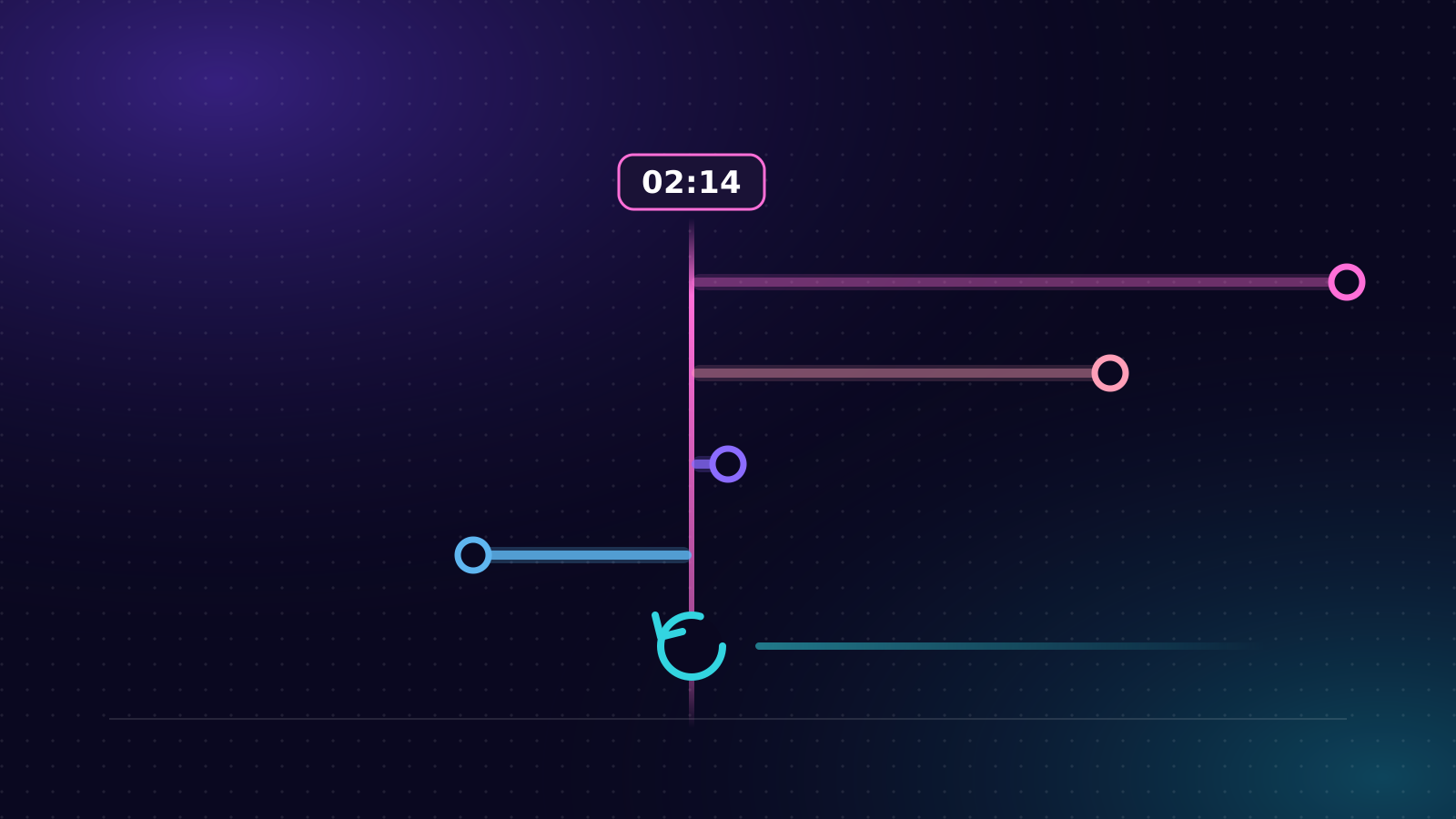
Line 3 stops at 02:14. A bearing has been running hot. When does the right person find out, and do they know why?
Follow one event like that through the factory and you learn more than any framework slide will show you. I call it time to truth: how long it takes your factory to know what really happened, with enough context to act on it.
Hover over or tap a stage to see what the factory and its systems look like.
The truth arrives eventually
The factory. Paper travellers and whiteboards on the floor, and spreadsheets in the office with macros only one person understands.
The truth. Written down by hand and typed up whenever someone gets round to it, if at all. By then the detail has gone, and every department has its own version of the number.
AI value: low. AI can help you read the data you have, but it can't analyse what was never captured. For example: an AI assistant on a spreadsheet tidies it up and charts it more clearly.
To move on. Map how one order really flows. Then take the paper off one line, and use AI to read the paper history you already have.
The truth arrives when the booking goes in
The factory. Production and scrap typically booked into ERP at a terminal every hour, or at the end of the job or shift. ERP knows the order started and finished.
The truth. Posted when someone books it. You know how many, and what it cost. You don't know why, because watching what happens in between isn't ERP's job.
AI value: small. AI can find trends in transactional data and forecast from them, but it sees totals rather than causes. For example: flagging a product whose scrap cost is creeping up across orders.
To move on. Keep ERP doing what it does well: planning, costing, purchasing and the business record. Add a shopfloor layer for everything between start and finish.
The truth arrives after the fact
The factory. Tablets and digital forms, and a point solution for each department. Better than paper, but people still type the numbers in and the tools don't talk to each other.
The truth. Entered after the event, by hand, from memory or a note. Rounded, and missing the short stops and the order it belonged to.
AI value: modest. AI can make sense of data people enter by hand and spot patterns across disconnected tools, though it's held back by data that's rounded and late. For example: grouping free-text downtime notes into common causes.
To move on. Capture from the machine and the scanner, not the keyboard, on a platform that can grow beyond one problem.
The truth arrives right now
The factory. MES/MOM as the operational backbone, with machines connected. Operators work from one screen with instructions and checks built in.
The truth. Captured as it happens, with the order and reason attached. Nobody argues about the numbers any more.
AI value: significant. AI can learn from your own operations, spotting anomalies and finding root causes, because every event arrives with its context. For example: a copilot that explains why Line 3 stopped from the facts, not a guess.
To move on. Connect the wider stack deliberately, so planning, engineering, quality and maintenance work from the same data. Grow the AI use cases with it.
The truth arrives before it happens
The factory. ERP, MES/MOM, PLM, scheduling, quality and a data platform working as one architecture. Each system does its own job and shares what it knows.
The truth. Trends raise warnings early. Maintenance is planned because the data says so, not because the calendar does.
AI value: high. AI can predict and optimise across the whole stack, because planning, engineering, quality and maintenance data finally line up. For example: maintenance planned from a bearing's condition, and the schedule adjusted around it.
To move on. Scale the AI use cases with a measurable payback, and set the guardrails before you let anything act.
The truth gets acted on before anyone asks
The factory. AI agents working on trusted, contextualised data. They prepare the decision and the paperwork, and a person approves it.
The truth. Turned into a ready-made action in seconds. People stay in control, and approve with the facts in front of them.
AI value: very high. AI moves from advising to preparing the action, so people decide in seconds rather than hours. For example: an agent sees the bearing trend, raises the maintenance work order with the spare part reserved, and books it into the next planned stop for a supervisor to approve.
To move on. Track which recommendations people approve unchanged. Those are the candidates for autonomy, one decision at a time.
The truth gets acted on without asking
The factory. Agents make routine decisions on their own, inside limits the business has agreed. People set the rules and handle the exceptions.
The truth. Acted on as it arrives. People hear about the decisions that matter, and review the rest when they choose.
AI value: highest. AI acts within agreed limits, and each decision it takes frees people for the ones that need judgement. For example: an agent re-sequences tomorrow's schedule around a late delivery and tells the planner what changed.
Honestly. Very few factories are here yet, whatever the marketing says. Autonomy is earned decision by decision, on top of every stage before it.
Eventually: paper and Excel
The operator writes "machine fault, 40 minutes" on a downtime sheet. The sheet goes in a tray. At some point someone types it into a spreadsheet, if it gets typed up at all.
By the time anyone looks, the detail has gone. Which bearing? Was it the third time this month? Nobody can say, so the same failure happens again. And because every department keeps its own spreadsheet, every department has its own version of the number.
How you'll recognise it: travellers on clipboards, downtime on a whiteboard, and a morning meeting that starts with someone reading out yesterday's numbers from a notebook.
End of hour or shift: ERP on the shopfloor
Production and scrap are typically booked into ERP at a terminal every hour, or at the end of the job or shift. It's a real step forward. The quantities are in the system of record, and finance can cost the order.
The truth arrives when someone books the confirmation. You know how many were good and what it cost. You don't know why 40 were scrapped or why the line stopped, because ERP's job is running the business. Watching what happens between an order starting and finishing is a different job.
How you'll recognise it: accurate order totals, and nobody able to explain them.
After the fact: digitalised
Tablets replace the clipboards, and point solutions arrive: an OEE tool on a couple of lines, a checklist app, a maintenance app and a quality tool. Data still gets typed in by hand, and the tools don't talk to each other.
The truth arrives sooner, but always after the fact. Someone keys it in once the stop is over, from memory or a scribbled note, so it's rounded. The short stops never make it in, and the downtime record doesn't know which order was running.
How you'll recognise it: an app for every department, and a weekly report someone builds by copying between them.
Right now: automatic data capture
The data stops being typed in. This is usually where MES/MOM arrives as the operational backbone, bringing production, quality, inventory and maintenance onto the same data and connecting the floor to ERP.
The stop is logged at 02:14 from the machine itself. The operator picks a reason at 02:16. The order and the material are already attached, because the system knows what was running.
How you'll recognise it: operators work from one screen, and nobody argues about the numbers any more.
Before it happens: harmonious systems
A connected business. MES/MOM, ERP, PLM, scheduling, quality and data platforms work as one deliberate architecture. Each system does its own job and shares what it knows, and sensor coverage grows.
Now the bearing's temperature trend raises a warning at 23:40. Maintenance changes it during a planned stop on the night shift. Line 3 never goes down.
How you'll recognise it: maintenance gets scheduled because the data says so, not because the calendar does.
Before anyone asks: agentic, human in the loop
AI agents work on trusted, contextualised data, and prepare the decision before anyone thinks to ask for it. An agent spots the bearing trend, raises the maintenance work order with the spare part reserved, and books it into the next planned stop. A supervisor approves it in seconds, with the facts in front of them.
People stay in control. And every approval teaches you something: the recommendations people accept unchanged, week after week, are the ones you can start to trust on their own.
How you'll recognise it: decisions that used to take a meeting take a click.
Without asking: autonomous
Agents make routine decisions on their own, inside limits the business has agreed. An agent re-sequences tomorrow's schedule around a late delivery and tells the planner what changed. People set the rules, handle the exceptions and review the rest when they choose.
Autonomy here is earned decision by decision. It's never switched on for the whole factory at once.
How you'll recognise it: honestly, you probably won't yet. Very few factories are genuinely here, whatever their marketing says.
AI adds value at every stage, but the value compounds
You don't have to wait for "without asking" to get value from AI. What changes from stage to stage is how much it can do.
With paper and Excel, the value is low. AI can help you read the data you have, but it can't analyse what was never captured. An AI assistant on a spreadsheet can tidy it up and chart it more clearly, and that's about it.
With ERP on the shopfloor, AI can spot trends in the totals, but it can't explain them without shopfloor context. AI can find trends in transactional data and forecast from them, such as a product whose scrap cost is creeping up across orders. But it sees totals rather than causes, so it can tell you what happened far more often than why.
With digitalised point solutions, it's modest. AI can make sense of data people enter by hand and spot patterns across disconnected tools, for example grouping free-text downtime notes into common causes. It's held back by data that's rounded and keyed in late.
From stage 4 onwards, the value of AI climbs much faster. Once the truth arrives "right now", with its context, AI can learn from your own operations, spotting anomalies and finding root causes. A copilot can explain why Line 3 stopped from the facts, not a guess. With harmonious systems it predicts and optimises across the whole stack, because planning, engineering, quality and maintenance data finally line up: maintenance is planned from the bearing's condition, and the schedule moves around it. At "before anyone asks", agents prepare the action and people approve it. And at "without asking", AI acts on routine decisions within agreed limits.
AI adds value at every stage, but the biggest gains come in the later ones. That's why AI and the data belong in the same plan, from the start. Prediction needs history, and history needs data captured accurately and automatically, with its context. Put AI to work at whatever stage you're at, and let it pull the data forward: every gap it runs into tells you what to capture next, and every stage you move up makes it more capable. I go further into this in AI will transform your factory, if you give it the right data.
Where most factories are
Most factories I see sit somewhere between "eventually" and "after the fact". A few are genuinely "right now" across the board. The jump to right now is usually the biggest single step in value, because it's where data becomes trustworthy and departments start working from the same picture.
Your factory has a shape, not a single answer
This is the part a single maturity score hides. Time to truth is rarely the same everywhere.
It's common to find machine stops logged "right now" while quality checks still arrive "eventually" on paper. Or a plant with excellent dashboards and nobody who owns the process behind them. One site can be well ahead of another in the same group.
The slowest area sets the pace. Fast machine data doesn't help much if the reason, the quality result or the person who should act on it arrives a day later.
So ask the question area by area: process, data, systems, people, and analytics.
How to use it
Ask it at the next leadership meeting. Pick a real event from last week, a stop or a quality escape, and trace when each person learnt about it, and what they knew.
Then ask it on the floor. You'll usually get two different answers, and the gap between them is where the work is.
So, if Line 3 stopped at 02:14 tonight, when would you know?